Little worlds
How to build a terrarium (that actually thrives)
A terrarium is a rainforest the size of a cookie jar — plant it right and it nearly runs itself, recycling its own water behind the glass for months. Plant it wrong and it's a swamp by Tuesday. The difference is the layers, so here's the whole recipe.
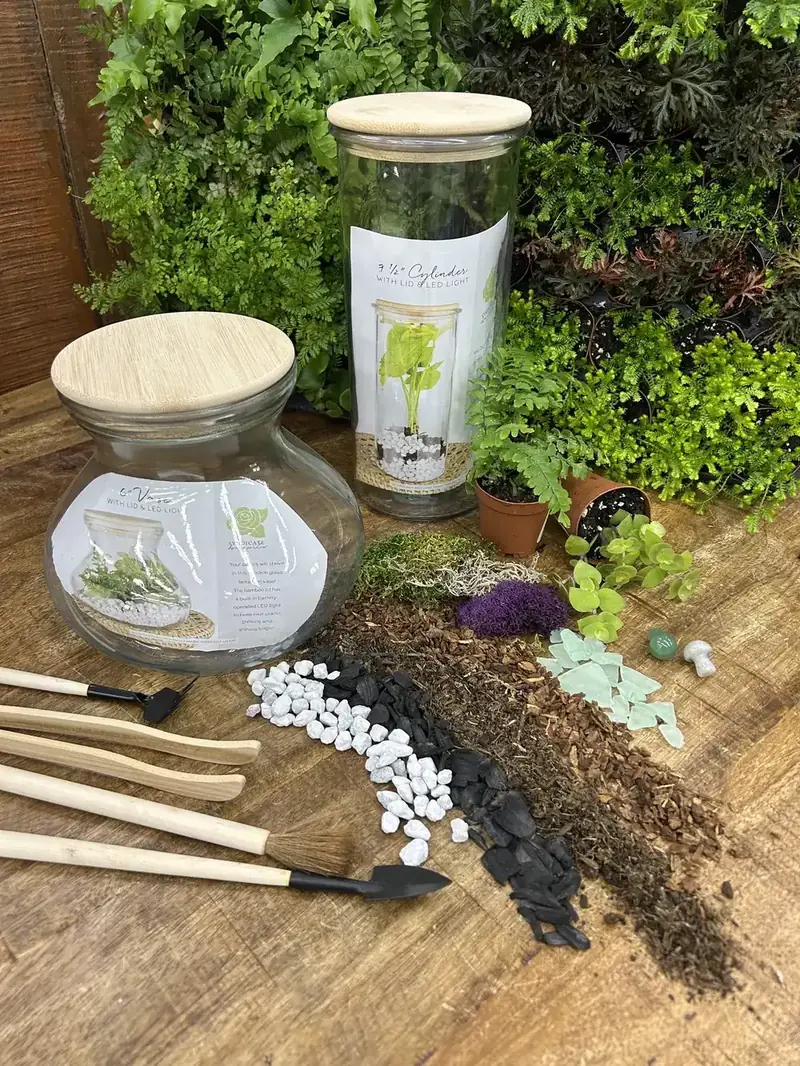
Step 1: The vessel
Any clear glass works — a jar, a vase, a fishbowl. A lidded vessel makes a closed terrarium: a self-watering mini ecosystem that's the classic "little world." Lidless is an open terrarium — more airflow, more watering, and the right call for anything that likes drier air.
Step 2: The layers (this is the whole secret)
Terrariums have no drainage hole, so you build the drainage inside: about an inch of pebbles on the bottom gives extra water somewhere to go, a thin layer of horticultural charcoal on top of that keeps the water sweet instead of stagnant, and then 2–3 inches of potting mix for the roots. Skip the charcoal and a sealed jar eventually smells like a pond. Don't skip the charcoal.
Step 3: The plants
Think small, slow, and humidity-loving: little ferns (maidenhair is the showstopper), club moss, polka dot plant, peperomia, nerve plant, and sheet or mood moss for the forest floor. Use chopsticks or mini tools to nestle roots into the soil — this is exactly what those tiny shovels are for. The one rule everyone breaks: no succulents or cacti in a closed jar. They're desert plants; a sealed rainforest rots them every time. Give succulents an open, dry bowl instead.
Step 4: The fun part
Top-dress with moss, bark, tumbled glass, a stone mushroom — whatever makes it yours. This is the step kids take over completely, which is rather the point.
Keeping it alive (mostly: leave it alone)
Light: bright and indirect — never direct sun, which turns a glass jar into a greenhouse in the bad way. An LED-lid vessel solves dark corners entirely. Water: a closed terrarium tells you what it needs — light morning fog on the glass that clears by afternoon is perfect; fogged up all day means crack the lid for a day or two; bone dry with no condensation means add a few spoonfuls of water down the glass. Most closed terrariums drink a few times a year. Trim anything that touches the glass, and pull yellowed leaves promptly.